How Youth Football Training Changes at Different Ages

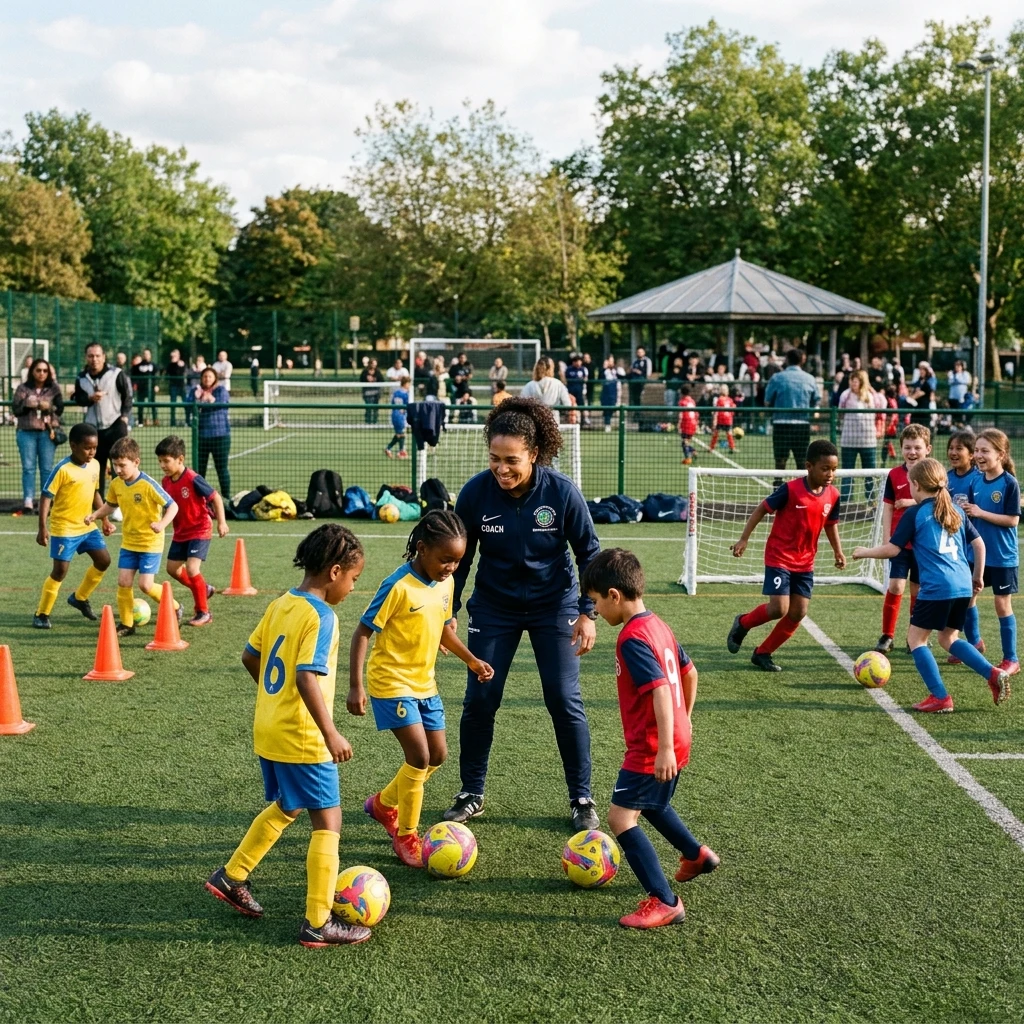
Youth football training should change as players grow, learn, and gain confidence. A session that suits a young child may be too simple for a teenager, while demanding the same physical or tactical expectations from every player can leave some behind.
Age bands offer useful guidance, not fixed rules. Coaches at youth football clubs can adapt activities to a player's development, experience, and enjoyment, keeping skill-building and safe participation at the centre.
Why age-appropriate football training matters
Age-appropriate football training matches activities and expectations to children’s physical, cognitive, and social development. It helps players build skills at a manageable pace while protecting confidence, enjoyment, and long-term participation.
Children do not develop in a straight line. Coordination, strength, attention, and confidence can change at different rates, even among teammates of the same age. Coaches should watch how players respond, then adjust the challenge rather than rely on birthdays alone.
A useful way to plan training is to check three things: what players can do, what they are ready to learn, and what keeps them engaged. If an activity is too easy, add a decision or a smaller space. If it is too hard, simplify the rules, reduce pressure, or demonstrate the action again.
Good youth football coaching connects physical development with learning. Young players need opportunities to practise fundamental movement skills, such as running, balancing, turning, and changing direction, alongside football-specific actions. Small-sided games can bring these together: players move, handle the ball, make choices, and communicate without long waits in a queue.
Progress also depends on safety and trust. Clear instructions, suitable equipment and space, sensible workloads, and positive feedback help players take risks and learn from mistakes. The aim is steady training progression, not making every session harder than the last.
Early years: movement, confidence, and fun
In the early years, football training should focus on movement, simple ball exploration, and enjoyable play. Short, varied activities help children practise coordination and develop confidence without placing adult-style demands on them.
For many children around preschool and early primary age, attention is best held by activities that start quickly and change often. A coach might set up a few stations: dribble around cones, stop the ball with a foot, chase a partner, or move like an animal before returning to the ball. These activities develop fundamental movement skills while letting children learn through play.
Ball mastery at this stage means becoming comfortable with the ball, not performing a long list of techniques perfectly. Encourage players to tap, roll, stop, and carry the ball using different feet. Give one simple instruction at a time, then let them explore. A game such as “traffic lights” can ask players to dribble, stop, or turn in response to a colour call.
Keep explanations brief and praise effort, trying again, and sharing space. Avoid eliminating children early or making every activity a race; these formats can leave some players waiting or feeling exposed. A few small goals and plenty of balls make it easier for everyone to join in. At this age, a positive first experience is a meaningful outcome in itself.
Building foundations in primary-school years
During the primary-school years, training can build ball control, passing, teamwork, and decision-making through active games. Players are often ready for more rules and feedback, provided sessions still give them frequent chances to touch the ball and try ideas.
Coaches can introduce dribbling with changes of direction, passing to a moving teammate, receiving the ball, and shooting at a target. Rather than isolating every technique in repetitive lines, use activities that make the skill useful. For instance, a 3v3 game encourages players to protect the ball, find a passing option, and recognise when to move forward.
Small-sided games are particularly useful because they create more involvement than large teams on a full pitch. A coach can change the challenge by adjusting the number of players, the size of the area, or a simple rule. If players keep bunching around the ball, set up two small goals to create wider options. If they pass without looking, pause briefly and ask what they noticed before receiving.
Introduce teamwork as practical habits: calling for the ball, taking turns, helping a teammate, and recovering after losing possession. Feedback should be specific and encouraging, such as “look up before you choose” rather than a stream of instructions. Players will make mistakes. They need room to solve problems, not a coach making every decision for them.
Competition can add excitement, but the score should not become the only measure of progress. At this stage, learning to control the ball under light pressure and enjoy playing with others matters more than winning every match.
The transition to more structured training
As players mature, training can gradually add technical detail, tactical ideas, and more demanding decisions. The best progression links new challenges to skills players already use, rather than introducing complex systems before they understand the basics.
A coach might move from passing to a teammate in space to asking players to create that space first. Practice can include receiving across the body, choosing when to pass or dribble, and reacting quickly when possession changes. Tactical awareness begins with simple questions: Where is the space? Who can help? What should we do after losing the ball?
Sessions can become more structured without becoming rigid. A short technical practice can lead into a small-sided game where players test the same skill under pressure. For example, practise turning away from a defender, then play a game where teams score by dribbling through a gate. This makes the link between practice and match situations clear.
Physical development also varies widely during this period. Some players grow and gain strength earlier than others, and a temporary change in coordination can happen as bodies change. Coaches should avoid judging potential by size or pace alone. Build movement quality, balance, and agility through football activities, and adapt intensity to the players in front of you.
Training progression should feel like a series of reachable steps. If a drill repeatedly breaks down, simplify one part; if players solve it easily, add a defender, a time limit, or another choice. Challenge is useful when players can still learn from it.
Teen years: individual development and performance
Teenage football training can include more advanced tactics, position-specific learning, and fitness work suited to each player's development. It should also give players more say in their goals, preparation, and review of performance.
Older players can explore team shape, pressing, defensive cover, transitions, and how different positions contribute to a game plan. Position-specific practice can help, but players still benefit from learning across roles. A wide player, for example, needs to understand both how to create space in attack and how to support the full-back when defending.
Physical training should be planned with care. Football sessions already involve running, accelerating, turning, and recovering; extra conditioning should have a clear purpose and suit the player's experience and maturity. Coaches can build general fitness through well-designed games and progressive activities rather than assuming every teenager needs the same workload. Rest, enjoyment, and other commitments matter too.
Injury prevention is part of good planning: warm up progressively, teach safe movement and landing habits, adjust activity when a player is tired or uncomfortable, and encourage honest communication. Coaches should follow club safeguarding and health procedures, and parents should seek qualified medical advice for health concerns rather than rely on training guidance alone.
Player ownership becomes increasingly important. Ask teenagers to identify one strength and one area to work on, then agree a practical goal for the next few weeks. Early specialisation is not a guarantee of success, and a narrow focus can reduce variety or enjoyment. Individual development works best when ambition stays balanced with health and a sustainable relationship with the game.
How coaches and parents can support progress at every age
Coaches and parents support progress by communicating calmly, protecting enjoyment and rest, and responding to each child as an individual. Age-appropriate training is working when players feel safe enough to learn, understand what they are practising, and want to return.
Parents can ask the coach what the session is designed to teach and how players of different abilities are supported. Look for active sessions, clear and respectful communication, and feedback that recognises effort and learning as well as results. A child who leaves every session anxious or repeatedly sidelined may need a conversation about the environment or the level of challenge.
Coaches can make small adjustments that have a large effect on participation:
- Offer easier and harder versions of an activity, so players can work at an appropriate challenge level.
- Use demonstrations and short cues, then allow time to practise without constant interruption.
- Rotate roles and positions, especially for younger players, so they gain a broad understanding of the game.
- Plan rest and recovery alongside training and matches; avoid adding extra work simply because a player is enthusiastic.
- Notice confidence and enjoyment, not only goals, wins, or physical maturity.
There is no single training frequency that fits every child. Age, experience, school demands, other sports, and recovery all matter, so families should follow the club’s guidance and speak with the coach if the schedule feels difficult to manage. If a player has persistent pain, unusual fatigue, or a health concern, pause and seek appropriate professional advice.
Common questions about youth football training
How often should children train at different ages? There is no universal schedule. Younger players often benefit from shorter, playful sessions, while older or more experienced players may choose more frequent organised training. Account for matches, other activities, rest, and the child’s response.
When should football training become more competitive? Competition can be introduced gradually when players understand the activity and can enjoy the challenge. It should not replace skill development, fair participation, or a supportive environment, and the right balance differs by club and player.
Do all players develop at the same rate? No. Physical growth, coordination, confidence, and football experience vary, including among children in the same age group. Coaches should adjust expectations and activities rather than compare players by one trait.
How can parents tell if training is age-appropriate? Look for active involvement, clear instructions, a suitable challenge, positive feedback, and sensible attention to safety and rest. Players should have chances to practise skills and make decisions, not spend most of the session waiting or hearing criticism.