The Role of Coaches in Youth Football Development

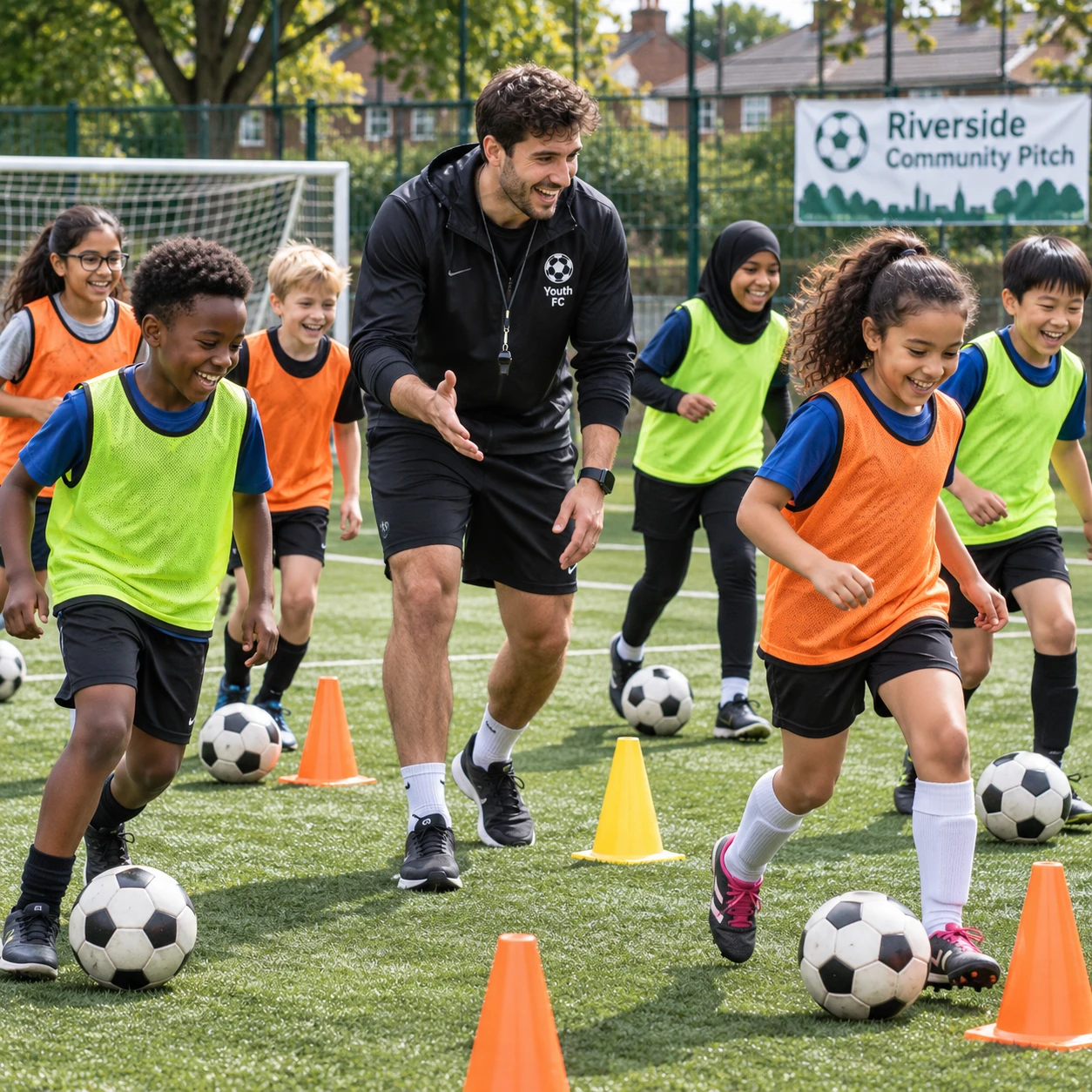
A youth football coach shapes far more than a team’s formation or match-day performance. Through everyday choices about practice, feedback and participation, coaches help young players learn the game, build confidence and feel part of a team. Good player development keeps football enjoyable and age-appropriate while giving each child room to progress at their own pace.
More Than Teaching Football Skills
A youth football coach supports learning, participation and personal growth as well as football ability. The way a coach treats players can influence whether they feel welcome, keep trying and enjoy being part of the club.
That influence shows up in small moments: inviting a quieter player into a drill, explaining a decision without embarrassment, or praising a thoughtful pass even when it does not lead to a goal. These actions teach respect and responsibility alongside the rules of football. They also help players understand that effort, curiosity and consideration for teammates matter.
At a youth club, coaches often work with children who have different experience levels, confidence and reasons for playing. One player may want to compete, while another is still learning to feel comfortable with the ball. A coach can set shared standards while offering different kinds of support. Progress should be measured against each player’s starting point, not only against the strongest player or the latest scoreline.
Coaching has limits, too. A coach cannot control every factor in a child’s development, and should not be expected to act as a parent, counsellor or medical professional. Their role is to provide a constructive football environment, notice concerns and involve the appropriate club or family contact when more support is needed.
Building Technical and Tactical Foundations
Coaches build technical skills and tactical awareness through age-appropriate practice that connects ball work with real decisions. Young players learn more than a technique when they can try it, see what happens and try again in a game-like setting.
Ball control, passing, receiving, dribbling and shooting are essential foundations. Rather than relying only on lines of players taking turns, coaches can use small-sided games and simple challenges that give everyone frequent contact with the ball. For example, a passing activity can ask players to find space after releasing the ball, linking technique to movement and awareness.
Decision-making grows when the practice includes choices. A coach might ask, “Where could you move to help your teammate?” instead of telling a player exactly where to stand. This helps children scan the pitch, recognise options and communicate. Instructions should still be clear, particularly for younger players, but a brief question can prompt them to think rather than simply follow directions.
Age-appropriate coaching means adjusting the task, not lowering expectations. Younger or newer players may need more space, simpler rules and demonstrations. More experienced players can handle tighter areas or added conditions. Coaches should watch whether a challenge is stretching players productively or making them hesitate and disengage. Good practice gives players repeated chances to make decisions, not just repeat movements without understanding the game.
Supporting Physical Development Safely
Coaches support physical development by teaching movement skills, building activity gradually and matching sessions to players’ ages and abilities. Safe training includes time to warm up, drink, recover and adapt when a player is tired or uncomfortable.
Football naturally involves running, stopping, turning, balancing and changing direction. Sessions can develop coordination and agility through varied, enjoyable movement games rather than demanding fitness tests. For younger children, the priority is often learning to move confidently and control their bodies. As players grow, coaches can introduce more structured conditioning while keeping it suitable for their experience and the club’s guidance.
Players do not all grow or acquire physical skills at the same pace. A child who is temporarily smaller or less powerful than teammates may still have strong awareness and touch. Coaches should avoid using size or speed as a shortcut for judging potential. Adjusting pitch size, team numbers, work periods or equipment can help players take part meaningfully.
Rest is part of development. Coaches should respond to signs of pain, unusual fatigue or distress and follow club procedures, including involving parents or guardians where appropriate. They should not diagnose injuries or pressure a child to continue. Training harder is not automatically better; the aim is a sustainable, enjoyable experience that respects each player’s needs.
Developing Confidence, Resilience, and Teamwork
Coaches develop confidence, resilience and teamwork by giving specific encouragement, treating mistakes as part of learning and helping players work toward shared goals. Children are more likely to take on a challenge when they know they will be treated fairly, whether they succeed or need another attempt.
Useful feedback describes an action the player can repeat or change. “You checked your shoulder before receiving the ball” is more helpful than a general “Great job,” because it names the choice behind the result. When correcting a mistake, coaches can keep the message brief: identify one next step, then give the player a chance to try it. Public criticism and sarcasm can make children reluctant to take risks, so feedback should preserve dignity.
Resilience does not mean ignoring disappointment. After a missed chance or a difficult match, a coach can acknowledge the feeling, help players identify one lesson and bring attention back to what they can control. The same approach applies to team results: review effort, communication and decision-making rather than defining a child by a win or loss.
Teamwork grows through shared tasks. Coaches can rotate roles, encourage players to communicate across the group and praise unselfish actions such as tracking back or helping a teammate reset after an error. These habits make collaboration visible. Confidence is strengthened by belonging and useful feedback, not by praise that feels automatic or by making one player the example for everyone else.
Creating a Safe and Inclusive Team Environment
A safe, inclusive team environment protects children, sets clear standards for respect and gives every player a fair chance to participate. Coaches should follow their club’s safeguarding policies and reporting procedures, not rely on informal judgment alone.
Safeguarding includes appropriate conduct, supervision and communication, as well as knowing how to raise a concern. Coaches must use the club’s approved processes for contact with young players and follow guidance on changing areas, transport, photography and one-to-one situations. Requirements differ by country and organisation, so clubs should provide current policies, training and a named safeguarding lead. When a concern arises, the coach should report it through the proper channel rather than promise secrecy or investigate independently.
Inclusion is practical as well as welcoming. Coaches can explain activities in more than one way, demonstrate a skill, adjust rules or equipment, and check privately whether a player needs support. They should challenge bullying, discriminatory language and exclusion promptly. Fair participation does not always mean every child gets identical tasks; it means adapting the session so players with different abilities, experience or needs can take part safely and with purpose.
Clear team expectations help everyone. Agree on how players speak to one another, respond to officials and handle disagreement. Apply those standards consistently, including to the most talented players. For broader guidance, clubs can consult the Football Association’s safeguarding information and follow the policies relevant to their own governing body. Safety and belonging are conditions for learning, not extras to add after football practice.
Working With Parents and the Club
Coaches, parents and clubs support player development best when they communicate clearly and reinforce consistent expectations. Parents can share useful information about a child’s needs, while coaches explain the team’s approach, routines and ways to raise concerns.
At the start of a season, a club or coach can outline training times, attendance expectations, equipment, playing-time principles and the best contact route. It also helps to explain how the team balances development and competition. Parents do not need a detailed report after every session, but they should know who to speak with if a concern affects their child’s wellbeing or participation.
For parents, supportive habits are straightforward: help a child arrive prepared, ask what they enjoyed or learned, and let the coach handle tactical instructions during the match. A calm question such as “What did you try today?” gives a child space to reflect. Conflicting instructions from the sideline can distract players and make it harder for them to make decisions independently.
Clubs carry responsibility for supporting coaches, too. They should provide safeguarding procedures, suitable training, access to equipment and a clear route for escalating concerns. A volunteer coach who receives no guidance may struggle to meet expectations, even with good intentions. Regular communication between coaches and club leaders can identify problems early and keep standards consistent across teams.
What Effective Youth Coaching Looks Like
Effective youth coaching sets clear goals, observes how players respond and adapts sessions to keep learning active and enjoyable. Coaches can review progress through effort, confidence, decision-making and participation, alongside technical improvement and match performance.
A practical session can follow a simple cycle: choose one learning aim, create an activity where players can practise it, observe what happens and adjust the next challenge. If the aim is receiving under pressure, for example, begin with a manageable passing activity, then add a defender or reduce space when players are ready. Finish with a game that lets them use the skill in context.
After training, coaches can make a short note: who is engaging, which players need another explanation, and whether the activity gave everyone enough chances to practise. This is more useful than trying to assess every detail at once. Players can also help set a small goal, such as calling for the ball or looking up before passing. Goals should be specific and within the player’s control.
Common coaching errors are often well-intentioned:
- Making every session about winning: Results feel like an easy measure of progress, but they can push coaches to favour short-term performance over learning. Keep competition in context and give development goals a place in practice and match reviews.
- Using the same task for everyone: A uniform activity may seem fair, yet it can be too easy for some and overwhelming for others. Adjust space, rules or support while keeping the learning aim clear.
- Giving constant instructions: Coaches may want to prevent mistakes, but talking through every decision leaves players little room to think. Offer one clear cue, then let the game continue long enough for players to respond.
For parents and club leaders, the key question is whether the coaching environment helps children learn, participate and feel safe. A team can value competition while still sharing opportunities, respecting different development timelines and treating players as people first. That is the lasting contribution of a youth football coach.